
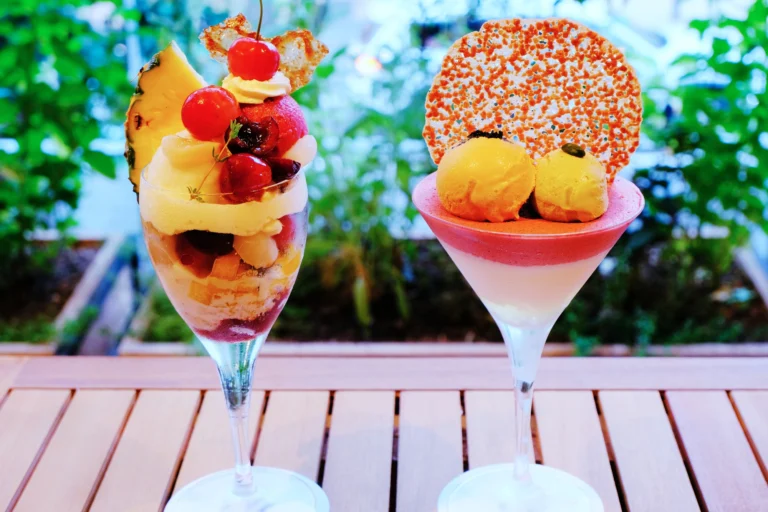
In most of Japan, you end a night of drinking with ramen. Sapporo, though, opts for a much sweeter close: the shime-parfait (シメパフェ or 〆パフェ), a tall glass of sorbet, gelato, fruit, and layered sweets. The term was coined only in 2015, but this parfait tradition has been going on for much longer. It’s now catching on nationwide as a sweet way to end the evening that doesn’t involve alcohol.
A long-standing culture given a new name
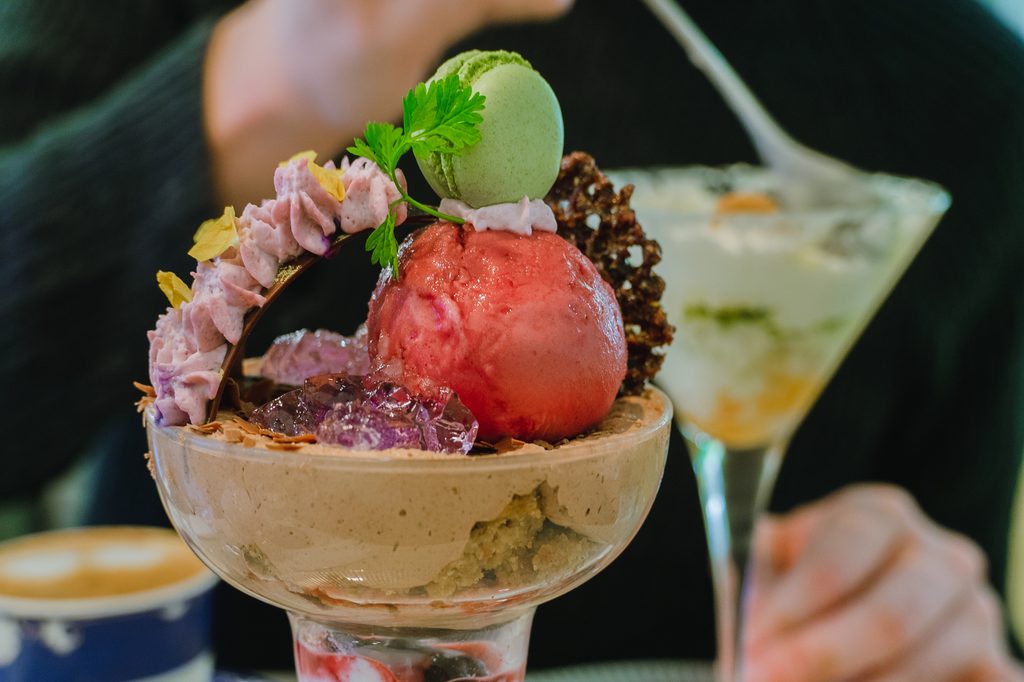
The Sapporo Parfait Promotion Committee says that in French, parfait means “complete.” Thus, the parfait completes the day. However, this isn’t necessarily the giant, sugary dessert served at a family restaurant. Specialty shops tend to go for a more adult vibe.
For example, Momobukuro, one of the Tokyo outposts of Sapporo’s night-parfait culture, skips whipped cream and cornflakes in favor of fresh-fruit sorbet and gelato, which helps even out some of the sweetness. It also works fantastically alongside whisky, brandy, or sparkling wine.
The term itself came from Kobayashi Hitoshi, creative director of Sapporo design firm Arika Design. After moving to Sapporo from Tokyo, he noticed that a lot of adults had a habit of eating cake, ice cream, and parfaits late at night. The “shime” comes from the verb shimeru (締める, “to close”) and refers to the last dish of the day. It’s a familiar concept; in Okinawa, there’s shime steak, where people eat steak as the very last dish.
Sapporo’s winters may help explain the original habit. The city’s heavily insulated, well-heated homes make eating ice cream in winter less bonkers than it sounds, and Hokkaido has a long association with dairy and cold sweets. (No surprise considering it’s Japan’s number one producer of milk.)
Turning late-night parfait traditions into a brand-new brand
Kobayashi coined and defined “shime-parfait” in 2015 while branding a client’s café. And then he led the launch of the Sapporo Parfait Promotion Committee on September 1, 2015, with seven member restaurants and an official website. Its secretariat is located within Crypton Future Media, the Sapporo-based company known worldwide for creating Hatsune Miku.
Crypton’s own cafe, MIRAI.ST cafe & kitchen, became member shop number one. The company had been developing a signature parfait around milk from Shibecha in eastern Hokkaido and decided it made more sense to promote Sapporo’s entire parfait culture rather than just a single cafe.
The campaign worked amazingly well. Newspapers, television, travel media, and online outlets picked up the story within weeks. (Proof that everyone loves ice cream.) The committee appeared at Sapporo Autumn Fest and, by 2016, had taken shime-parfait outside Hokkaido to a food fair in Nagoya.
Shime-parfait is one of those “only in Japan” phenomena that many outside the country don’t know exist. If this is the kind of Japanese culinary experience you’re looking for, make sure to check out our Tokyo dinner tour, which offers a guided evening through some of Japan’s best food and drink.
A bump in the road and the subsequent comeback
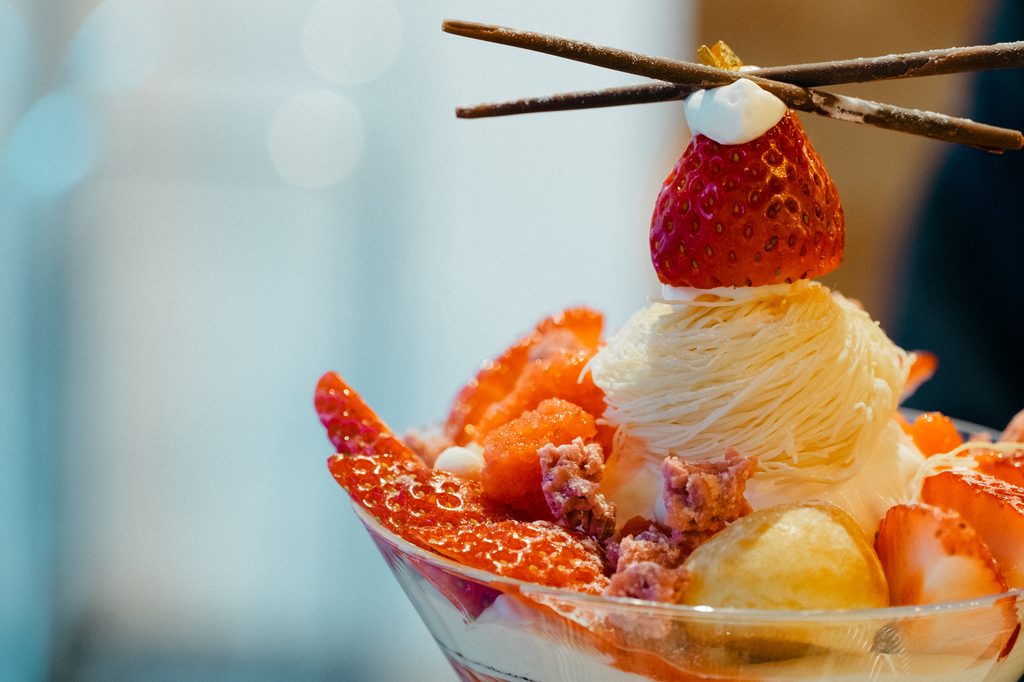
Then COVID happened. Restaurant-industry analyst Miwa Daisuke argues that the pandemic effectively killed the first wave because the whole branding was framed around people closing the night with parfait after a night of drinking. With no midnight social drinking, the need for a closing parfait melted to nothing faster than a snowball in summer.
There has since been a comeback (a second wave of shime-parfait, if you will). However, the economic landscape isn’t quite what it used to be. As a result, the branding has shifted too.
The original night-parfait shops were in entertainment districts. The second wave can operate almost anywhere. Takeout chains such as Ice wa Betsubara need tiny spaces and small staffs, cutting two of a restaurant’s biggest costs: rent and labor. Its roughly ¥700 (~$4.40) parfaits are also far cheaper than the ¥2,000 (~$12.50) creations common at higher-end specialty shops.
Parfait bars are taking another route. The franchise Parfait Bar &VIGO started as a bistro and bar in 2019, with its first night-parfait store opening in 2022. It has since expanded rapidly, reaching 13 stores nationwide as of August 2026 and more planned in September and October. Its advantage is simple: a pure shime-parfait shop attracts not only those looking for an after-drink dessert, but pretty much anyone with a sweet tooth: solo customers, families, drinkers, and non-drinkers.
Why the new parfait bar format works so well
To clarify: these places are, indeed, bars. Not cafés that happen to stay open late. Sapporo’s Parfaiteria PaL is often described as the birthplace of this night-parfait specialty format, and it can get lines forming as early as 7 p.m. (Want to skip the lines? Check out our Tokyo dinner tour, which books everything in advance for you.)
For non-drinkers, though, that may be exactly why the format works. &VIGO describes night parfait as something for people drinking after a meal, but also for people who do not drink and simply want the atmosphere of a bar. The parfait offers a legitimate place in nightlife without requiring alcohol.
And Sapporo still has the strongest claim to being the spiritual home. After all, Parfaiteria PaL opened in Susukino in July 2015. Bar Penguin-do (located in Sapporo’s Chuo Ward) has been serving late-night parfaits there since 2007, eight years before the phrase existed. Add to that Parfait, Coffee, Sake, Sato, opened by Kobayashi himself in 2016, which helped cement the brand.
The spread of shime-parfait beyond Hokkaido
GAKU now has shops in Tokyo, Osaka, Fukuoka, and Okinawa. Nagoya has even created its own Nagoya Parfait Promotion Committee and runs a program officially recognized by Sapporo’s shime-parfait movement.
That may be the best proof that the idea has outgrown the committee that branded it. The committee itself has shrunk from its peak membership, but shime-parfait has continued expanding into karaoke venues, yakiniku restaurants, sushi restaurants, takeout counters, and bars.
However, the more interesting story here is the branding of shime-parfait. It went from a vague tradition to an absolute sensation simply by giving it a memorable name that other cities wanted to copy.
Want to explore other facets of Tokyo after dark? Our Tokyo nightlife tour can show you everything from the tame to the daring.
Keep reading
Sources
札幌発の夜パフェ。池袋『モモブクロ』の芸術的パフェを堪能〜黒猫スイーツ散歩 池袋編6〜 さんたつ by 散歩の達人
札幌発の大ブーム「シメパフェ」。仕掛け人が語る、地域文化を育むということ Think LOCAL(大丸・松坂屋)
シメパフェ文化はなぜ札幌に根付いたのか?仕掛け人に聞くそのルーツ 北海道ファンマガジン
パフェを“大人の嗜好品”にした、札幌発祥の食文化。 BRUTUS×札幌発の観光Webマガジン
コロナ禍で消えた「夜パフェ」に《第2次ブーム》の気配、盛り上がり方が第1次と”ひと味違う”決定的理由 東洋経済オンライン
札幌シメパフェ 札幌パフェ推進委員会
札幌パフェ推進委員会 クリプトン・フューチャー・メディア ローカルチーム
シメパフェ ウィキペディア日本語版
夜パフェ専門店 店舗情報 株式会社GAKU
【関西初出店】半年で5店舗の急成長を遂げる夜パフェ専門店『パフェバー &VIGO』2月20日 京都河原町にオープン PR TIMES(株式会社CARTON)
Company: 目指すのは、心を満たす夜パフェBAR 夜パフェBAR &VIGO
【8/21開店】吉祥寺に「夜パフェBAR &VIGO」がオープンへ ヨドバシ裏に話題の夜パフェ専門店 シブきち
札幌の支出額は全国2位、寒い冬でもなぜ、アイスが好き?<北の食☆トレンド> 北海道新聞デジタル
パティシエが作るアートなパフェにうっとり♪ 池袋の夜パフェ専門店「モモブクロ」 ことりっぷ
SHOP|名古屋シメパフェ 名古屋パフェ推進委員会
さらに進行するアルコール離れ-若者で増える、あえて飲まない「ソバ―キュリアス」 ニッセイ基礎研究所
【子連れ目線でレビュー】夜パフェ専門店 Parfaiteria PaL に行ってきたin北海道札幌市 note(子育て公務員まっさん)
「パフェ、珈琲、酒、佐藤/佐々木/佐藤堂」完全ガイド!違いやおすすめメニュー&覚えておくべき注意点 ジョニlog
なぜお酒を飲むとラーメンが食べたくなるのか? imidas(集英社)
元祖さっぽろラーメン横丁の歴史 元祖さっぽろラーメン横丁
元祖さっぽろラーメン横丁|すすきのの歴史に触れる街歩き SAPPORO TOURISM(札幌商工会議所)
ラーメン横丁/札幌市 たびらい