

A Nippon TV news crew recently spent a day at Tokyo Station International Clinic, following foreigners who needed medical attention in the middle of their Japan trips.
The cases were about as glamorous as you’d expect for a trip to the doctor: a swollen insect bite picked up near the Imperial Palace, a mother’s ear infection that followed a cold she caught from her son, a two-month cough diagnosed as atopic cough, and a 15-year-old Dutch traveler whose hip hurt after walking more than 10,000 steps a day.
It was a useful look at something tourists do not usually put on the itinerary. But it also skipped the part travelers probably need to know most: what happens when you actually have to pay.
Japanese health insurance for visitors isn’t automatic

Tokyo Station International Clinic is pretty much a best-case scenario for a foreign visitor. The clinic opened in December 2023 in Gran Roof 1-M2F, directly connected to Tokyo Station’s Yaesu exit. It’s open from 9 a.m. to 9 p.m. every day of the year. Staff can speak Japanese, English, and Mandarin, and the clinic accepts walk-ins, online bookings, telemedicine, and hotel calls. It also accepts more than 30 payment methods, including foreign credit cards.
In other words, it’s specifically designed for people who don’t necessarily know how Japanese healthcare works, which makes it the complete opposite of the typical Japanese clinic.
The first thing a tourist needs to understand is that Japan does not have health coverage for one-off visitors. If you don’t have a Japanese health insurance card, you will be paying 100% of the medical bill under jiyū-shinryō (自由診療), or free-market care.
That doesn’t necessarily mean Japanese doctors charge whatever they feel like. Most hospitals still calculate their charges using Japan’s national medical fee schedule, multiplying the relevant number of points by ¥10 (~6 cents). In the FY2024 survey by the Ministry of Health, Labour and Welfare (MHLW), 85.7% of 5,569 hospitals answering the question used the standard ¥10-per-point rate.
Extra cost for language access
Foreign-friendly hospitals (i.e., places that readily offer services in English and other languages) handle it a little differently, though.
Only 73.4% of designated hub hospitals for foreign patients charged ¥10 per point. Among hospitals accredited under JMIP (the Japan Medical Service Accreditation for International Patients) or listed as Japan International Hospitals, that number drops to 29.8%. Instead, 27.4% charged between ¥15 and ¥20 (~9 to 13 cents), while 41.7% charged more than ¥20 per point.
That is an awkward fact buried underneath the reassuring message that Japan is becoming easier for international patients: language access costs money. Usually, it is not an obvious “foreigner surcharge” on the receipt, like an interpreter fee. Instead, the extra cost is generally built into the price of the medical service itself.
Besides emergency medical care, there are numerous issues involved with bringing medications to Japan. We cover these in detail as part of our free five-day Japan trip planner. Sign up to get the first installment today.
Are foreigners skipping out on medical bills in Japan? Survey says no.
There’s also a much bigger misconception worth clearing up. Foreign tourists and residents are not, according to the government’s own numbers, bankrupting Japanese hospitals.
The MHLW’s FY2024 survey found ¥88.14 billion (~$557M) in unpaid medical bills among responding hospitals. Foreign patients accounted for ¥1.33 billion (~$8.4M), or about 1.5%. About 67% of hospitals had unpaid bills from someone, while only 28.9% had unpaid bills from foreign patients.
Fewer foreign patients are skipping out on bills, too. In the ministry’s September snapshots, the share of hospitals with an unpaid foreign-patient bill fell from 18.3% in 2023 to 15.7% in 2025, and the number of foreign patients who left one fell from 1,993 to 1,707, even as more hospitals treated foreign patients.
The yen total, though, is a different story. It dipped from about ¥244.7 million (~$1.55M) in September 2023 to ¥232.9 million (~$1.47M) in 2024, then rose to roughly ¥273.5 million (~$1.73M) in September 2025. While fewer bills go unpaid, those that do are getting bigger as tourism to Japan continues to boom.
In fact, the reason why there’s such a misconception about foreigners skipping out on medical bills isn’t that it’s common; it’s that extreme cases have made headlines. For example, one patient cited in a Nikkei policy column left a bill of ¥11.87 million (~$75K).
Even so, the rules have changed.
Tips for travelers in Japan: a new rule and travel insurance
Medical institutions (whether clinics, hospitals, or otherwise) can report unpaid bills from foreign visitors through the government’s reporting system, which shares the information with the Immigration Services Agency. And since April 1, 2026, the reporting threshold has dropped from ¥200,000 (~$1.3K) to just ¥10,000 (~$63).
That doesn’t mean a ¥10,000 unpaid clinic bill automatically gets you banned from Japan. But it does mean immigration officials will screen you much more closely if you try to come back. And if you refuse to pay that bill, they might deny you entry.
However, that does leave the question of what to do if you end up sick or injured in Japan and are left with a bill higher than Tokyo Skytree.
As it turns out, just because Japan’s national health insurance doesn’t cover visitors, that doesn’t mean you’re out of luck. Some travel insurance sold to visitors covers medical care in Japan specifically, and the Japan National Tourism Organization (JNTO) promotes policies you can buy even after you arrive. JNTO also warns that a serious accident can run to ¥7.5 million (~$47K) or more.
Unfortunately, according to a Japan Tourism Agency survey, while 73% of travelers had private medical insurance for their trip, only about 5% had bought inbound travel insurance, the kind you can buy after you land. Among those who hadn’t bought it and didn’t know it existed, 30% said they would have bought it if they’d known.
What to do if you actually need to go to the hospital

Here’s some important advice to keep in mind:
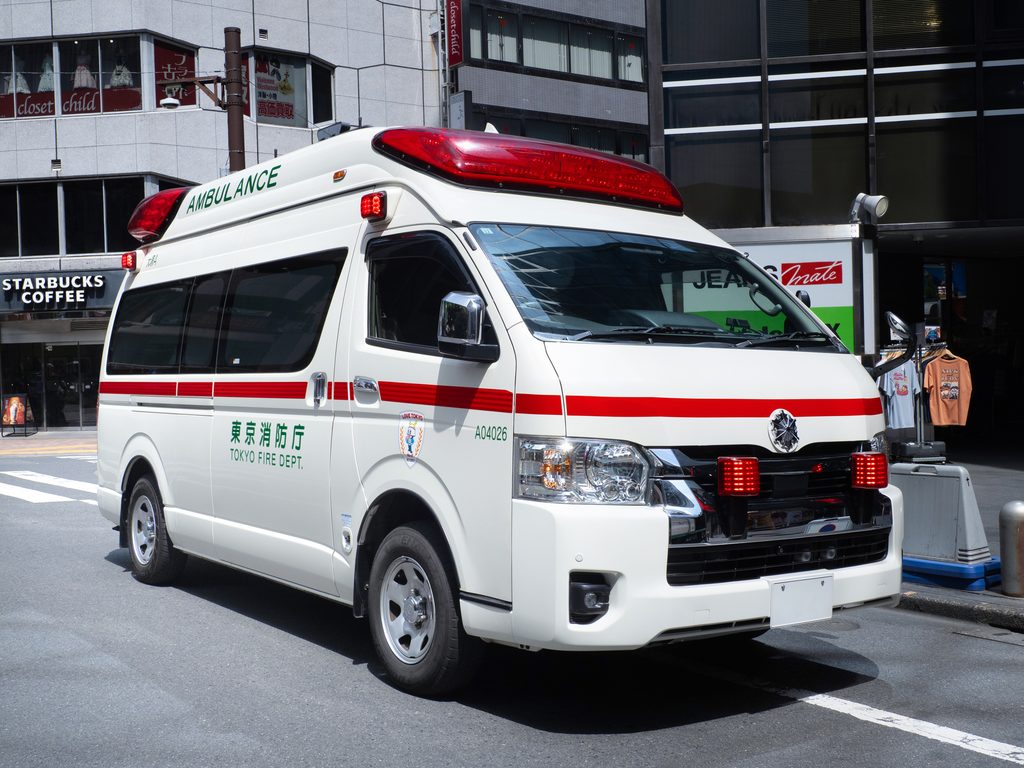
- If something genuinely serious happens (like heatstroke), call 119. Don’t hesitate. While treatment can cost you, the ambulance, at least, is free in Japan, regardless of nationality.
- For more ordinary health issues, go to a neighborhood clinic, not a major hospital. Since 2022, many large hospitals charge a fee of at least ¥7,000 (~$44) plus tax (usually ¥7,700, or ~$49) if it’s your first visit there and you don’t have a referral. (This doesn’t count emergency patients.)
- Also, as a bit of reassurance: Japanese doctors cannot simply refuse to treat you because you are foreign. Article 19 of the Medical Practitioners Act imposes ōshō gimu (応召義務), a duty to respond to patients unless there is a justifiable reason not to.
For these and other tips on preparing for your trip to Japan, check out our free trip planner.
The thing is, Japan can be remarkably affordable if all you need is a doctor. It just gets a tad more expensive for hospitals, specialized care, and longer stays. The best thing you can do to prepare yourself is to carry travel insurance that covers medical care in Japan and keep enough money or credit available to settle an unexpected bill.
Keep reading

Sources
【密着】外国人が駆け込むクリニック 観光中に”不調” 止まらないせき・耳の痛み…虫刺されで?大きな腫れ、股関節の炎症? 思わぬ病気か 『every.気になる!』 日テレNEWS NNN/Yahoo!ニュース (archived)
令和6年度「医療機関における外国人患者の受入に係る実態調査」の結果 厚生労働省
令和6年度「医療機関における外国人患者の受入に係る実態調査」結果概要 厚生労働省
令和7年度医療機関における外国人患者の受入に係る実態調査について(概要版) 厚生労働省
外国人旅行者の医療費未払い問題、医療機関による報告基準を「20万円以上」から「1万円以上」に拡大し厳格対応―厚労省 GemMed
訪日外国人旅行者の医療に関する実態調査等を行いました 観光庁
「外国人の医療費未払い増えた」は本当か 1件1187万円の事例も 日本経済新聞
For safe travels in Japan – Guide for when you are feeling ill Japan National Tourism Organization
訪日外国人のための救急車利用ガイド 総務省消防庁
特定機能病院、200床以上地域医療支援病院等、10月1日より紹介状なし患者から「初診時7000円以上」の徴収を—厚労省 GemMed
全スタッフが英語・中国語対応可能、外国人の診療ニーズに特化したクリニック「Tokyo Station International Clinic」を12月1日、東京駅八重洲口にオープン PR TIMES
外国人の受入れ・秩序ある共生社会実現に関する関係閣僚会議 首相官邸
医師法 e-Gov法令検索
令和7年度 外国人患者受入れ医療機関対応支援事業(夜間・休日ワンストップ窓口事業)2025年12月マンスリーレポート 厚生労働省