
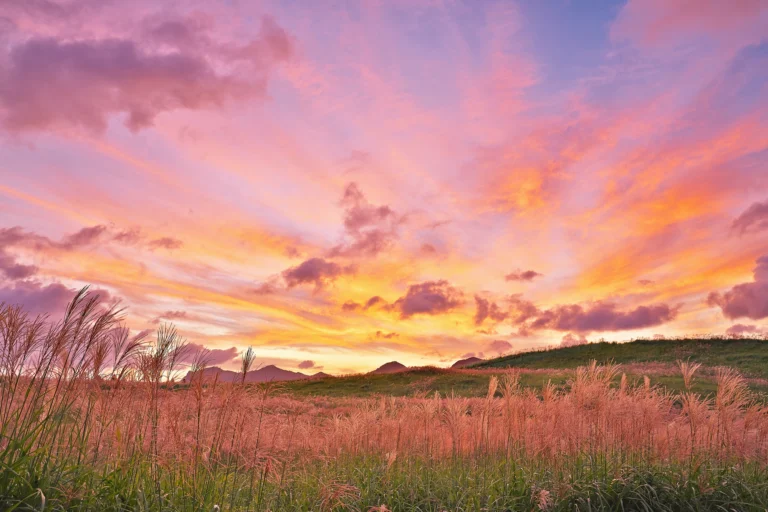
Soni, a tiny village on the Nara-Mie border, has a tourism problem that doesn’t fit the usual overtourism story.
To start, the village has about 1,200 residents. Last year, roughly 380,000 people visited, most heading for the Soni Plateau (曽爾高原, Soni Kōgen), where fields of Japanese silver grass, or susuki, turn golden around sunset. On busy autumn weekends, those visitors can turn the narrow mountain roads into a traffic jam stretching for kilometers.
And there’s an important detail here: it doesn’t appear to be foreign tourists behind the problem. Instead, all signs point to Japanese day-trippers arriving by car from around Kansai.
380,000 visitors for a village of 1,200
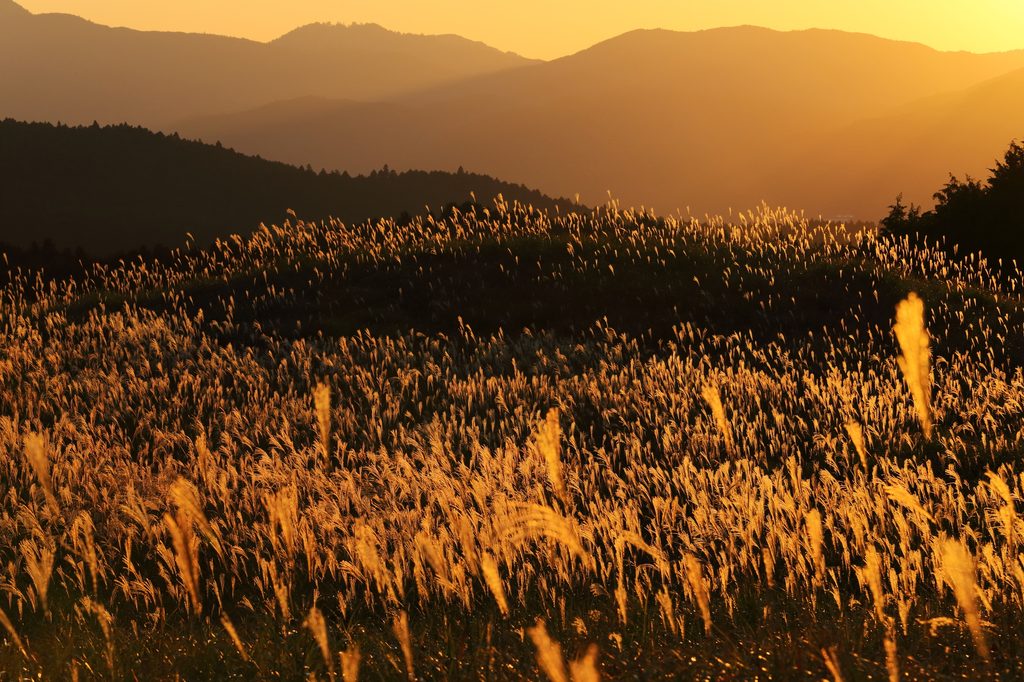
As of September 1, 2026, Soni’s population numbered 1,197. Its signature attraction is a roughly 38-hectare expanse of susuki inside Murō-Akame-Aoyama Quasi-National Park, a protected area spanning parts of Nara and Mie Prefectures. The scenery is particularly popular in late October and November, when the grass catches the setting sun and turns the hillsides gold.
And yeah, you read that header right: last year, this village attracted 380,000 tourists. That’s roughly 300 times its resident population.
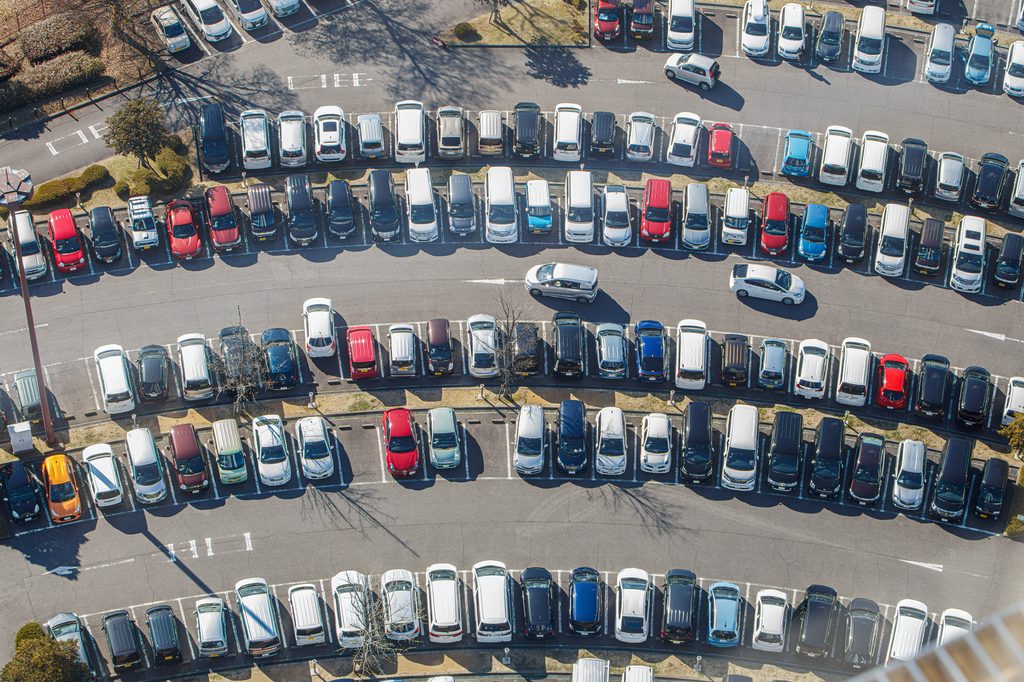
The overtourism traffic problem starts well before the peak of autumn. On September 22, during the Silver Week holidays, Kansai TV counted around 200 meters of cars at noon and 700 meters by 4 p.m. In October and November, the line can reach around five kilometers (i.e., three miles of bumper-to-bumper traffic).
The village warns that parking can take more than three hours on autumn weekends. One resident told Kansai TV that leaving home can take two hours on particularly bad days because cars coming down from the plateau prevent residents from getting out. Others worry about emergency vehicles being unable to get through in times of need.
Blaming foreign tourists for traffic? Not so fast
The thing is, Kansai TV’s report doesn’t mention foreign tourists or inbound tourism. Instead, it describes visitors coming from across the Kansai region. Most people reach the plateau by private car because public transportation is inconvenient and the nearest station is about 45 minutes away. Similar to destinations such as Senkyaku Banrai or Atami, the plateau is mostly a local tourist draw.
The village also restricts buses during the busiest period. Large and mid-sized buses have to reserve parking two weeks in advance, and the bus parking area isn’t available on weekends and holidays in October and November because the congestion is so ridiculous.
Nara Prefecture’s 2024 visitor survey also offers some important context. Among day-trippers to Nara, 76.4% came from the Kansai region, including 35% from Osaka and 20.1% from Nara itself. Foreign visitors accounted for about 3.2 million of the prefecture’s estimated 28.77 million visitors.
Of course, that survey is for the whole prefecture, not just Soni, so we don’t know the exact breakdown of how many foreign visitors are heading to this scenic village.
That being said, the fact that it’s mainly private cars (as opposed to trains or buses) bringing visitors to Soni pretty much screams “domestic tourists.” That’s not to say there are no foreign visitors, since the village does offer experience tours directed at inbound tourists. But they’re almost certainly not the cause of the traffic jams.
Getting around Japan on your trip here can be a challenge. If you need help preparing for your Japan trip, our free five-day trip planner tells you everything from what to pack to how to navigate public transit.
Everyone wants the same sunset
The basic problem may be less about how many people visit than when they visit. Soni tourism official Hashizume told Kansai TV that the concentration of visitors at the same time is probably the main cause of the congestion. Everyone wants to see the same grassland at roughly the same time of day: sunset. And that creates a bottleneck.
The plateau has two existing parking areas, each with about 150 spaces. The village has added another lot with room for roughly 200 cars, hoping to reduce the queues.
There is a relatively simple solution: come on a weekday. The traffic is worst on weekends, so if you want to enjoy the sunset but avoid contributing to the congestion, pick a day from Monday to Friday.
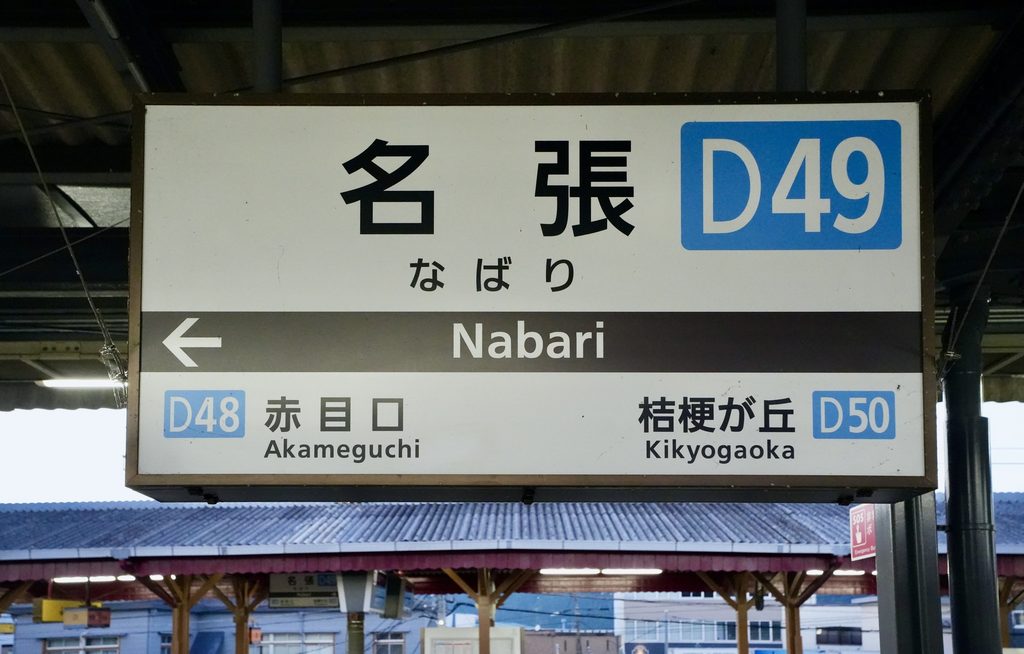
The other alternative is a seasonal bus service from Kintetsu Nabari Station to the plateau from October 1 through November 30, with a one-way adult fare of ¥1,100 (~$7). However, the service is limited, and the last bus from the plateau leaves at 3:27 p.m., long before sunset.
More tourists, but not necessarily more money
The biggest problem? The Soni Village Tourism Promotion Corporation, which operates the Farm Garden, says increased visitor numbers haven’t necessarily meant increased sales. Younger visitors, who have reportedly become more prominent as social media has drawn attention to the plateau, tend to prioritize the experience itself rather than buying souvenirs.
And those who are interested in buying souvenirs might run into an unexpected issue. On crowded days, the sheer number of visitors can overwhelm the mobile signal. And that signal is vital for running cashless payment systems.
Meaning, cashless payments might not work at precisely the moment when crowds are largest. Since younger visitors tend not to carry cash, they may end up walking away without making a purchase.
This leaves Soni to deal with the less glamorous side of viral tourism: clogged roads and overwhelmed infrastructure, without even seeing the economic benefits that a tourism windfall can bring.
Should Soni close the road?
All that considered, it’s no wonder that some want to close down the road. Among the top 200 Yahoo! News comments on the story, roughly 40% called for some form of vehicle restriction, park-and-ride system, shuttle bus, or entry fee. Mountain destinations such as Kamikōchi and Oze were frequently cited as examples of places that already restrict private cars.
The most-liked comment made a different observation: telling people somewhere is crowded might only make them more interested in going. In other words, the traffic jam itself becomes part of the attraction.
That creates a difficult question for Soni. A village can invite tourists and benefit from tourism, but residents shouldn’t simply be expected to accept gridlocked roads as the price.
For now, the simplest advice is also the most useful. If you’re planning to see Soni Plateau, go on a weekday, avoid the peak afternoon rush, and bring cash. And if you’re looking for a quieter rural Japan experience, plenty of places (like Minoh, Kiyosato, and Suwa) haven’t become quite so famous yet.
Keep reading

Sources
「家から出るのに2時間」ススキの絶景スポットで深刻な渋滞に 人口の300倍の観光客が押し寄せる村 住民からは悲鳴の声 “体験を重視”する若者多く直売所では売り上げ伸びず 奈良・曽爾高原 関西テレビ
曽爾高原にお越しの皆様へ 曽爾村
曽爾高原 曽爾村観光協会
曽爾高原 奈良県
奈良県曽爾村 観光 曽爾村
令和6年奈良県観光客動態調査報告書 奈良県
曽爾高原へのアクセスについて 三重交通 (archived from 2025)
曽爾高原へのアクセスについて 三重交通 (2026 bus schedule)
【独自】訪日客、7都道府県に集中 上位100地点、25県なし 西日本新聞(共同通信) (archived)
「ひたすら迷惑…」「伊根の舟屋」人気で住民疲弊 観光にかじを切った町 観光と住民の平穏は共存なるか 関西テレビ